

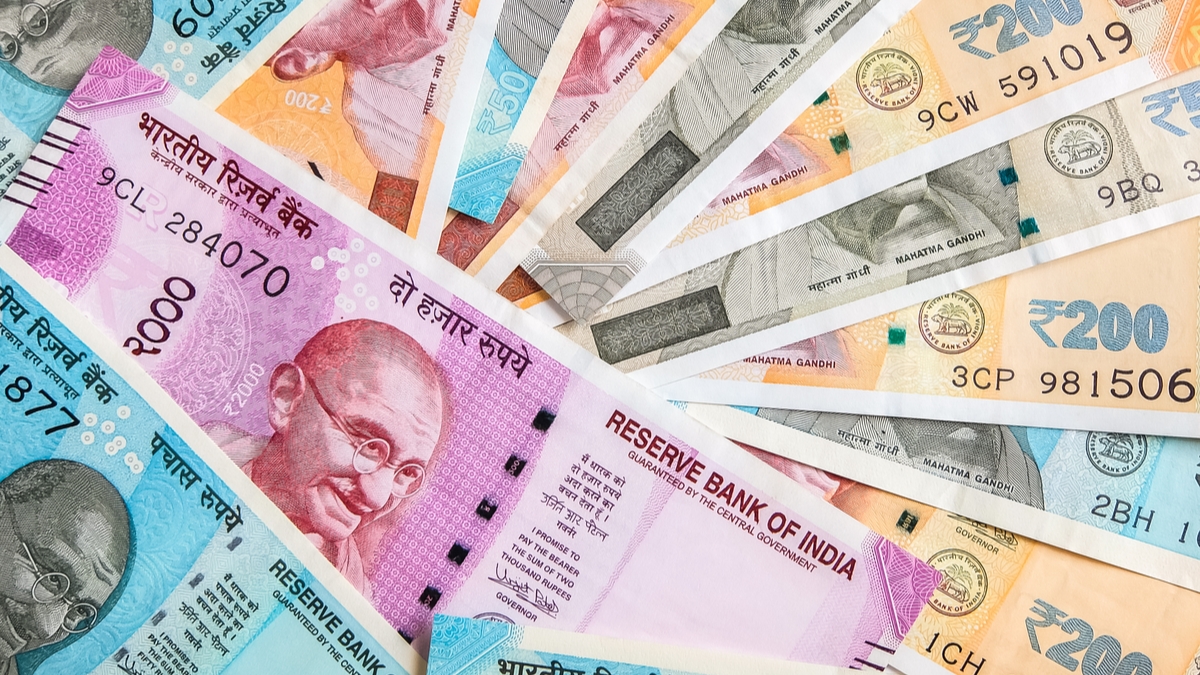
- Indian Rupee (INR) falls for a second day
- World Bank lowers growth forecast to 6.3%
- US Dollar (USD) recovers from 3-year low
- Trump softens trade tariff tone
The US dollar-to-Indian rupee (USD/INR) exchange rate rose on Wednesday after a flat finish yesterday. The pair ended at 0% in the previous session, settling on Tuesday at 85.17. At 21:30 UTC USD/INR trades +0.37% higher at 85.48 and is in a range of 85.08 to 85.52.
The Indian rupee is falling for a second straight day as the World Bank cuts its economic growth forecast for India, citing increased uncertainty in the global economy. The World Bank lowered its forecast by 0.4% to 6.3% for the fiscal year that started on April 1st.
The World Bank considers that any benefits of private investment from monetary easing and regulatory streamlining will likely be offset by global economic weakness and uncertainty.
The World Bank cut the growth forecast for many southern Asian nations.
Meanwhile, the International Monetary Fund’s forecast was lowered from 6.5% to 6.2% for the current fiscal year. These provisions are below the Reserve Bank of India’s 6.5% growth forecast.
The US Dollar is rising across the board. The US Dollar Index, which measures the greenback against a basket of major currencies, rose 0.94% on Wednesday to 99.84, extending gains from Tuesday.
The US dollar is rising against most major currencies on Wednesday amid hopes of a de-escalation of trade tensions and after President Trump walked back firm threats to fire Federal Reserve chair Jerome Powell.
The trump administration also said it would consider lowering tariffs on Chinese goods pending talks with Beijing, lifting hopes that the trade war could calm soon.
U.S. Treasury Secretary Scott Beth separately indicated that there could be a de-escalation in U.S.-China trade tensions, and any trade deal with China could say that trade tariffs will be substantially cut.
On the data front, US PMI figures show that the PMI outperformed expectations., expanding by more than forecast. However, the service sector also saw growth slow considerably from 54.4 to 51.4.