

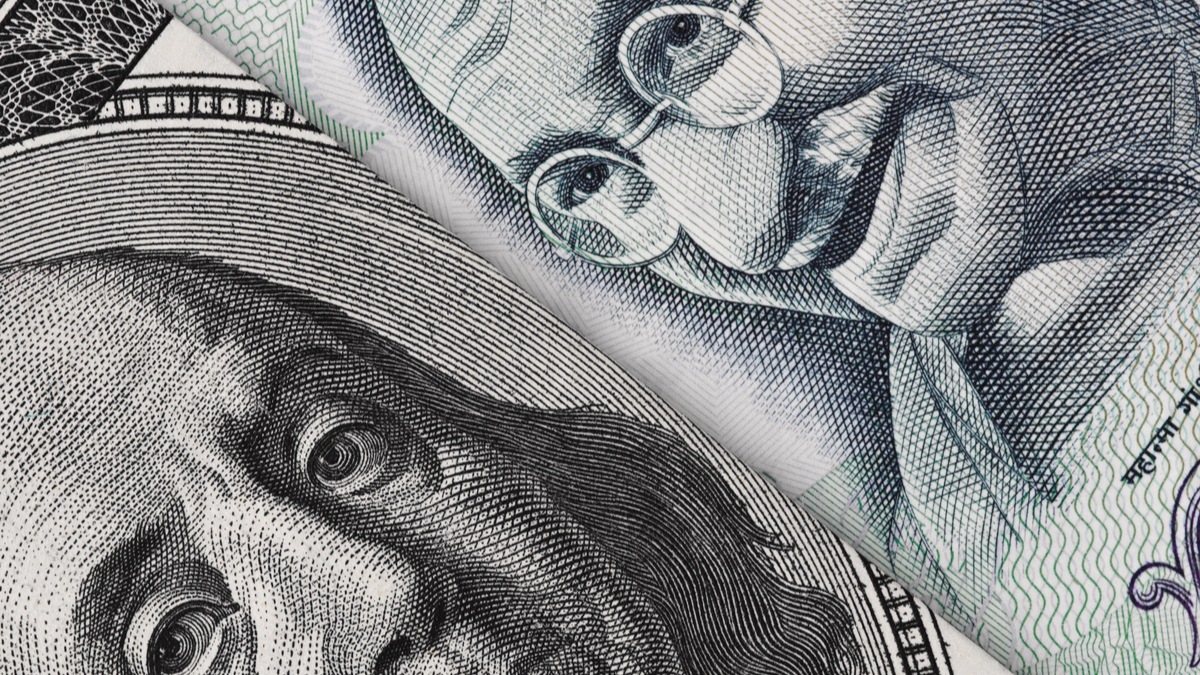
- Indian Rupee (INR) falls, extending losses for a 4th day
- Rupee is down 2% this year
- US Dollar (USD) rises against its major peers
- USD rises despite weak jobless claims data
The US Dollar to Indian Rupee (USD/INR) exchange rate is falling for a fourth straight. The pair rose 0.30% in the previous session, settling on Wednesday at 87.33. At the time of writing, USD/INR trades 0.29% at 87.58 and is in a range of 87.38 to 87.69.
The Indian rupee fell to a record low on Thursday amid a drop in Asian currencies ahead of tomorrow’s crucial monetary policy decision.
Uncertainties surrounding U.S. trade tariffs and persistent portfolio outflows have weighed on the rupee over the last two months, making it the worst-performing Asian currency in 2025. The Rupee has fallen over 2% so far this year.
The US Dollar is rising across the board. The US Dollar Index, which measures the greenback against a basket of major currencies, trades 0.03% higher, priced at 107.61 on Thursday adding to last week’s gains.
The US dollar is rising, snapping a two-day losing streak, as investors continued to assess the U.S. economic and monetary policy outlook alongside trade tensions.
U.S. Treasury Secretary Scott Bessent said that the Trump administration prioritizes 10-year treasury yields over the Federal Reserve interest rates to lower borrowing costs. He clarified that Trump was not pressurizing the Fed to cut rates, which helped the US dollar rise.
The U.S. dollar is rising despite weaker-than-expected jobless claims data. Claims rose to 217k, up from 207k the previous week.
Attention now turns to US non-farm payroll data, which is expected to show that 169,000 jobs were added in January, down from 256 in the previous month. Meanwhile, the unemployment rate is expected to hold steady at 4.1%.
This week’s lead indicators pointed to a slightly stronger nonfarm payroll. ADP payrolls came in above expectations, and the job sub-components in the ISM services and manufacturing reports also rose. Strong jobs data would give the Fed less reason to cut interest rates again after the central bank paused rate cuts in the January meeting.