


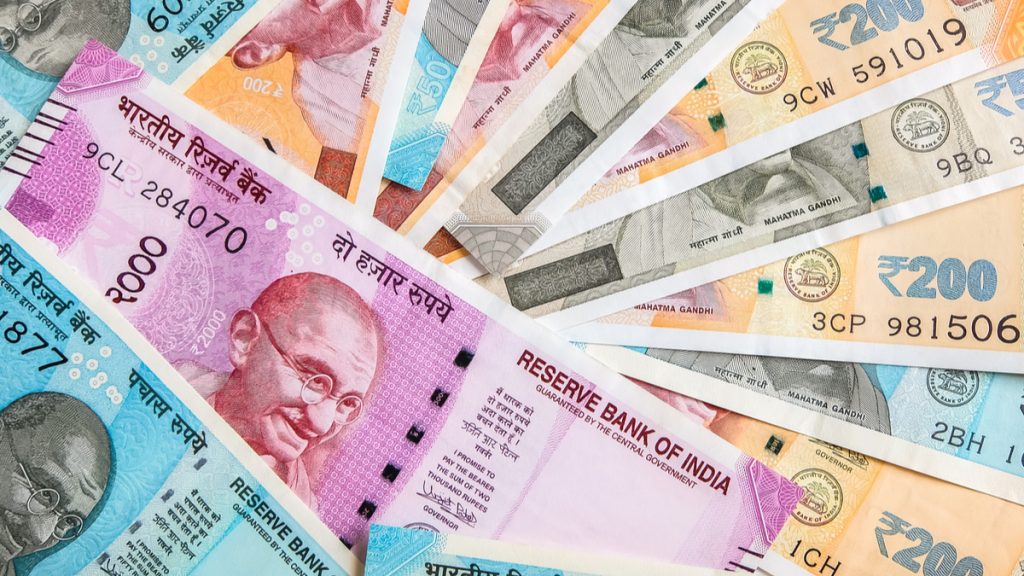
- Indian Rupee (INR) is rising after recent losses
- Domestic equities fall for a fifth day
- US Dollar (USD) falls versus its major peers
- US GDP was revised lower
The US Dollar Indian Rupee (USD/INR) exchange rate is falling after 3 days of gains. The pair rose 0.22% in the previous session, settling on Wednesday at 83.34. At 19:00 UTC, USD/INR trades -0.04% at 83.30 and trades in a range of 83.25 to 83.40.
The Indian rupee is heading higher despite domestic equities falling for a fifth straight day, with some investors trimming positions ahead of the election results.
The Nifty 50 closed down 1%, while the Sensex fell 0.9% as the indices experienced their worst sessions in three weeks.
Retail and high-net-worth investors are trimming their positions ahead of the election outcome. The market expects that the current government will stay; however, if it doesn’t win a majority, then that could make market conditions more challenging.
Meanwhile, oil prices have fallen sharply after Data from the Energy Information Administration showed that oil inventories decreased while fuel stockpiles rose last week, raising concerns over demand as driving season kicks off.
The US Dollar is falling across the board. The US Dollar Index, which measures the greenback versus a basket of major currencies, trades at -0.44% at the time of writing at 104.67, after two days of gains.
U.S. dollar is falling against its major pairs after a downward revision to US GDP and following slightly less hawkish commentary from a Federal Reserve official.
Data shows that the US economy expanded at a 1.3% pace in the first quarter, slower than the preliminary reading of 1.6%. Delving deeper into the numbers, the economy’s main growth engine, personal spending, grew at 2% versus previous forecasts of 2.5%.
The data points to a loss of momentum at the start of this year, as high interest rates and evaporating pandemic hearing savings weigh on American households and businesses. However, the downward revision in consumer spending was offset by stronger business and residential investment, which suggests that demand is still strong even if the headline GDP looks weaker.
Meanwhile, New York Fed President John Williams expects inflation to continue falling in the second half of this year. He believes that elevated borrowing costs are slowing the economy.
His comments come after a string of more hawkish comments from Federal Reserve officials, including Neel Kashkari, Minneapolis Fed president, who suggested that interest rates might need to increase to tame inflation.