


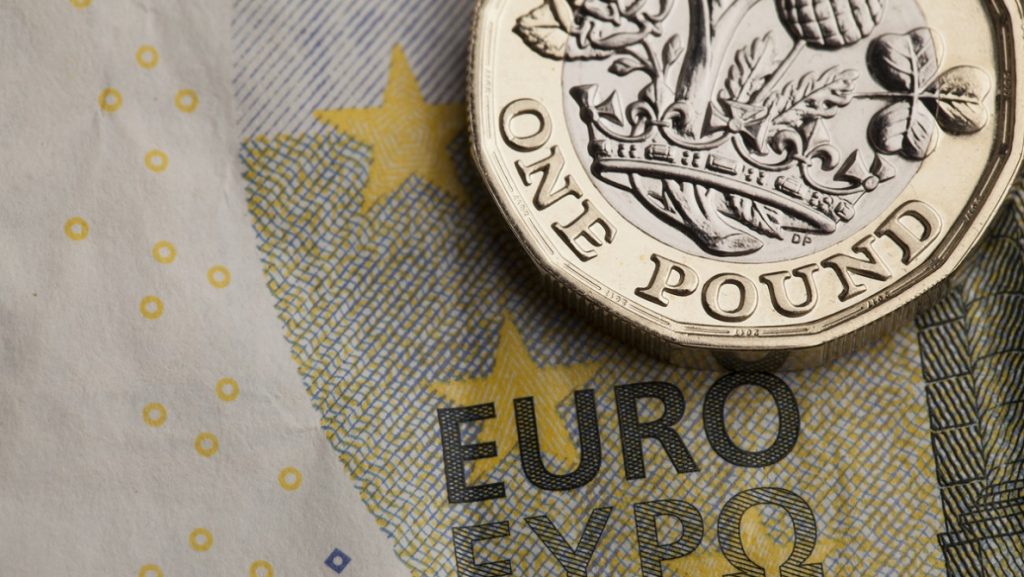
- Pound (GBP) rises after five days of losses
- UK services PMI was lifted to 51.3 from 50.5
- Euro (EUR) is falling despite business activity expanding
- ECB President Christine Lagarde sees inflation near 2%
The Pound-Euro (GBP/EUR) exchange rate is rising for a second straight day. The pair rose 0.63% in the previous session, settling on Wednesday at €1.1440. It traded between €1.1359 and €1.1447. At 17:00 UTC, GBP/EUR trades 0.13% at €1.1455.
The pound is rising as investors digest a Business Report from the Bank of England, done before the chancellor’s budget. The survey of 2000 firms shows that businesses expect to reduce staff numbers and raise prices at a similar rate to previously.
The decision-maker panel showed that firms plan to increase prices by 3.7% over the next 12 months, 0.1% more than they had expected a month earlier.
Meanwhile, the survey also showed that employment is expected to fall by 0.1% to -0.2% over the next year, in the three months to November.
Concerns about the health of the UK jobs market have been rising. Meanwhile, UK inflation fell to 3.6% year on year in October, and the OECD expects it to have peaked, boosting the case for an interest rate cut in the December meeting.
The euro is falling as weaker-than-expected retail sales in the eurozone region raise concerns over the health of the consumer.
Eurozone retail sales, which were a key measure of consumer spending, remained flat month on month in October, defying expectations of a 0.1% rise.
Retail sales have moved more or less sideways over the past four months, and is a sign that households remain wary of spending even as the bloc looks to consumers to drive the economic recovery.
Looking at the data by country, sales fell in Germany and France over the month, whilst remaining flat in Spain.
In November, eurozone consumer confidence remains steady around its highest level since February. Even so, consumers remain downbeat on a historical level preferring to give priority to saving over spending.