


- Indian Rupee (INR) falls after yesterday’s gains
- Indian stocks reached the highest level since September 2024
- The US Dollar (USD) rises versus major peers
- Concerns over US-China trade relations ease
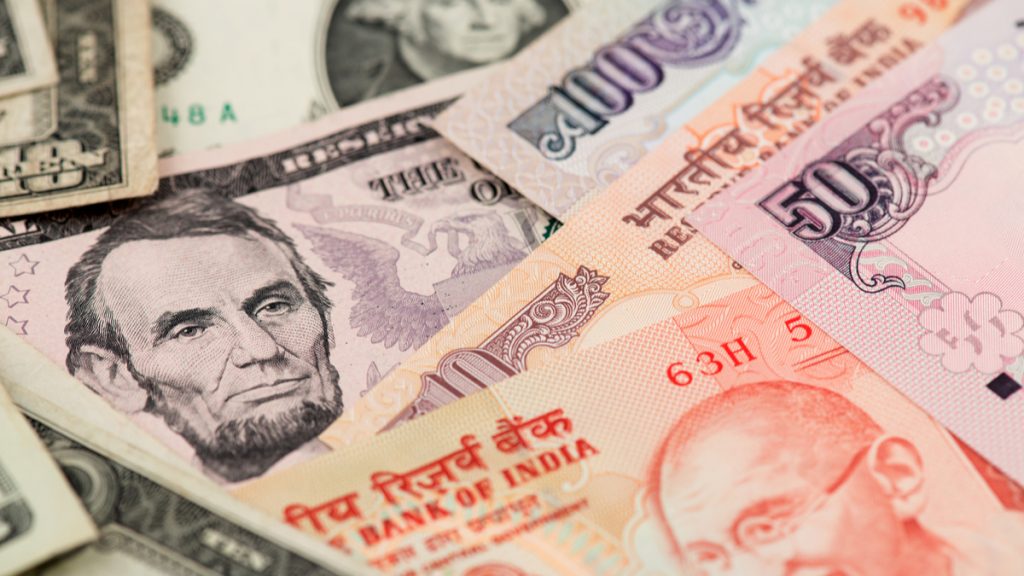
The US dollar-to-Indian rupee (USD/INR) exchange rate is rising after losses yesterday. The pair fell -0.14% in the previous session, settling on Monday at 87.88. At 18:30 UTC on Friday, USD/INR traded +0.17% higher at 88.02 and traded in a range of 87.89 to 88.09.
The Indian rupee is under pressure due to a stronger U.S. dollar and despite an increase in the benchmark equity markets.
India’s benchmark stock indices moved higher in the special Diwali session on Tuesday, extending the recent rally amid upbeat earnings and easing US-China trade tensions.
The Nifty 50 rose 0.1% and the Sensex rose 0.7% to close at the highest level since September 2024.
In the latest RBI monthly bulletin, the central bank said the domestic current economy had so far shown resilience to the considerable challenges to the global macroeconomic outlook. The RBI earlier this month lifted its forecast for the Indian economy to 6.8% for the current year, supported by domestic drivers including low inflation and strong corporate and banking balance sheets.
India continues to face punitive tariffs on exports to the USA, and Trump reiterated that these will remain in place unless India halts purchases of Russian oil.
The US Dollar is rising against its major peers. The US Dollar Index, which measures the greenback against a basket of major currencies, is trading +0.35% at 98.94, marking a straight day of gains.
The US dollar is rising to a weekly high, boosted by weakness in the yen, which has fallen to a one-week low against the US dollar, on expectations that the newly elected Japanese Prime Minister, Takaichi, will maintain an expansionary fiscal policy.
The US dollar is also receiving support from yesterday, when US-China trade tensions eased after President Trump confirmed that he would meet the Chinese president, Xi Jinping, at the end of the month.
On the data front, Philadelphia’s non-manufacturing business activity was one of the few releases this week, dropping to a four-month low. The ongoing U.S. government shutdown is bearish for the dollar, and the longer it continues, the more likely the impact will be negative for the US economy.